How to Value a Used Guitar
A practical, step-by-step guide to estimating value with confidence — whether you’re buying, selling, or flipping.
Identify the Guitar First
The fastest way to get a reliable value is to nail down the basics: brand, model, and (if possible) the year. The year matters because specs, factories, and finishes change over time.
Use serial numbers to confirm the year and factory. Our decoder page supports 20+ major brands and is a great starting point.
Go to Serial Number DecodersCondition Always Impacts Value
Condition is the biggest value lever. Even small issues can shift the price hundreds of dollars depending on the model.
Structural & Playability
- Neck straightness and truss rod function
- Fret wear (divots, flat spots, buzzing)
- Neck joint stability and action height
- Intonation and tuning stability
Common Damage Checks
- Cracks (especially acoustic tops and bridges)
- Headstock breaks or repairs
- Electronics noise, scratchy pots, dead pickups
- Loose tuners, broken switches, missing knobs
If you’re unsure, ask for close-up photos and a quick video demo showing the neck, frets, and electronics working.
Finish & Color Matter
Finish, color, and limited-run options can change value dramatically. A standard black model might be common, while a rare finish or limited colorway could command a premium.
Case, Gig Bag, and Original Accessories
Does it include a case? Is it original? An original hard case can add real value, while a missing case can reduce it — especially on mid-to-high-end instruments.
Stock vs. Modified — The Value Swing
All-original is often preferred for vintage instruments, but tasteful upgrades can add value for modern guitars. The key is whether the original parts are included.
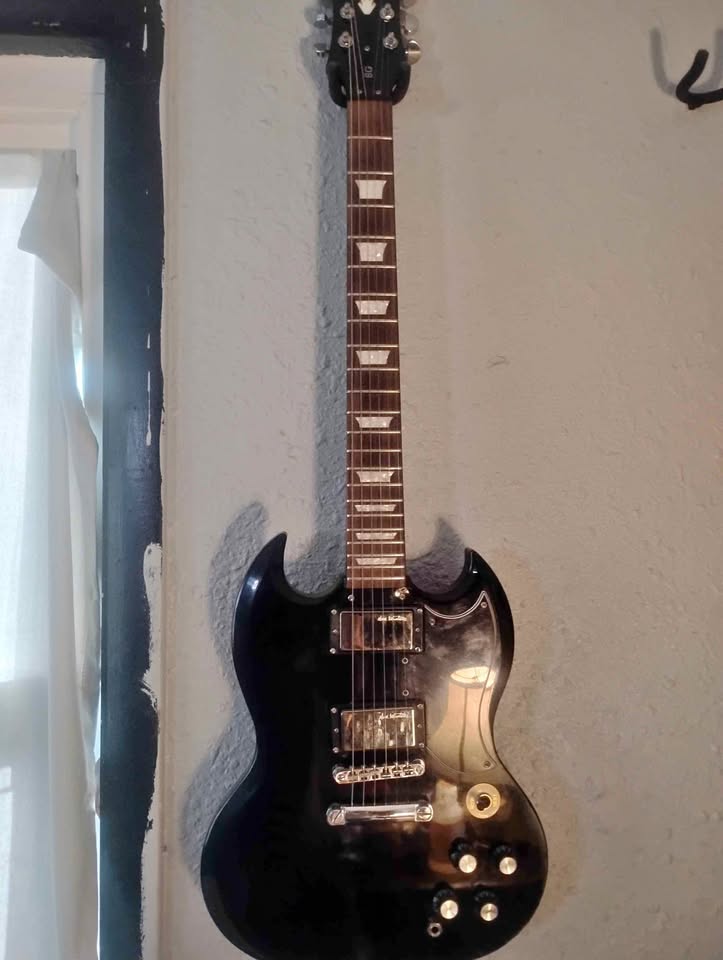
Example: Epiphone SG with Upgraded Pickups
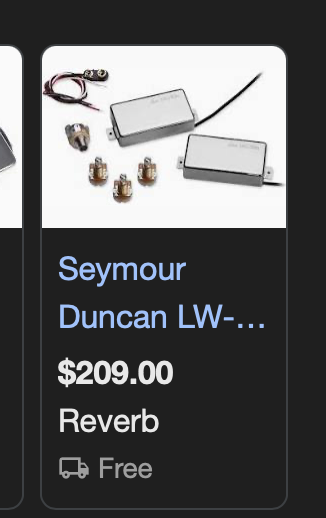
On its own, this guitar might be worth around $400 in typical used condition. But this listing included Seymour Duncan Dave Mustaine signatures — a pickup set that can sell for $200+ on its own.
If the original pickups are included, there’s extra upside: you can keep the upgraded set, or swap back to stock and sell the upgrade separately. Even if you don’t flip, the guitar is still worth more with the upgrades installed.
Keep vs. Flip: Factor the Repair Costs
If you’re keeping the guitar, upgrades might be worth it. If you’re flipping, calculate your costs carefully:
- New strings and setup
- Locking tuners or replacement hardware
- Electronics repair (jacks, pots, switches)
- Cosmetic fixes vs. functional repairs
Straight Flips Are Rare
Finding a cheap guitar and reselling immediately for profit is uncommon now. With tools like Google and Reverb.com, even non-players can research value quickly. Expect to earn your margin through setup work, cleaning, and smart buying.
Tip: Use recent sold prices, not just asking prices. The Reverb.com Price Guide is a quick way to see real-world ranges by condition.
Evaluate the Seller (and Ask Questions)
Seller trust matters. If possible, check marketplace ratings and past sales history. Don’t hesitate to ask for more photos or details.
- Refusal to provide serial number or clear photos
- Pressure to pay off-platform or avoid secure payment methods
- “Too good to be true” pricing or stock/stolen photos
- Inconsistent details about the model or specs
- Unwillingness to demo basic functionality
Use AI & Image Search to Validate
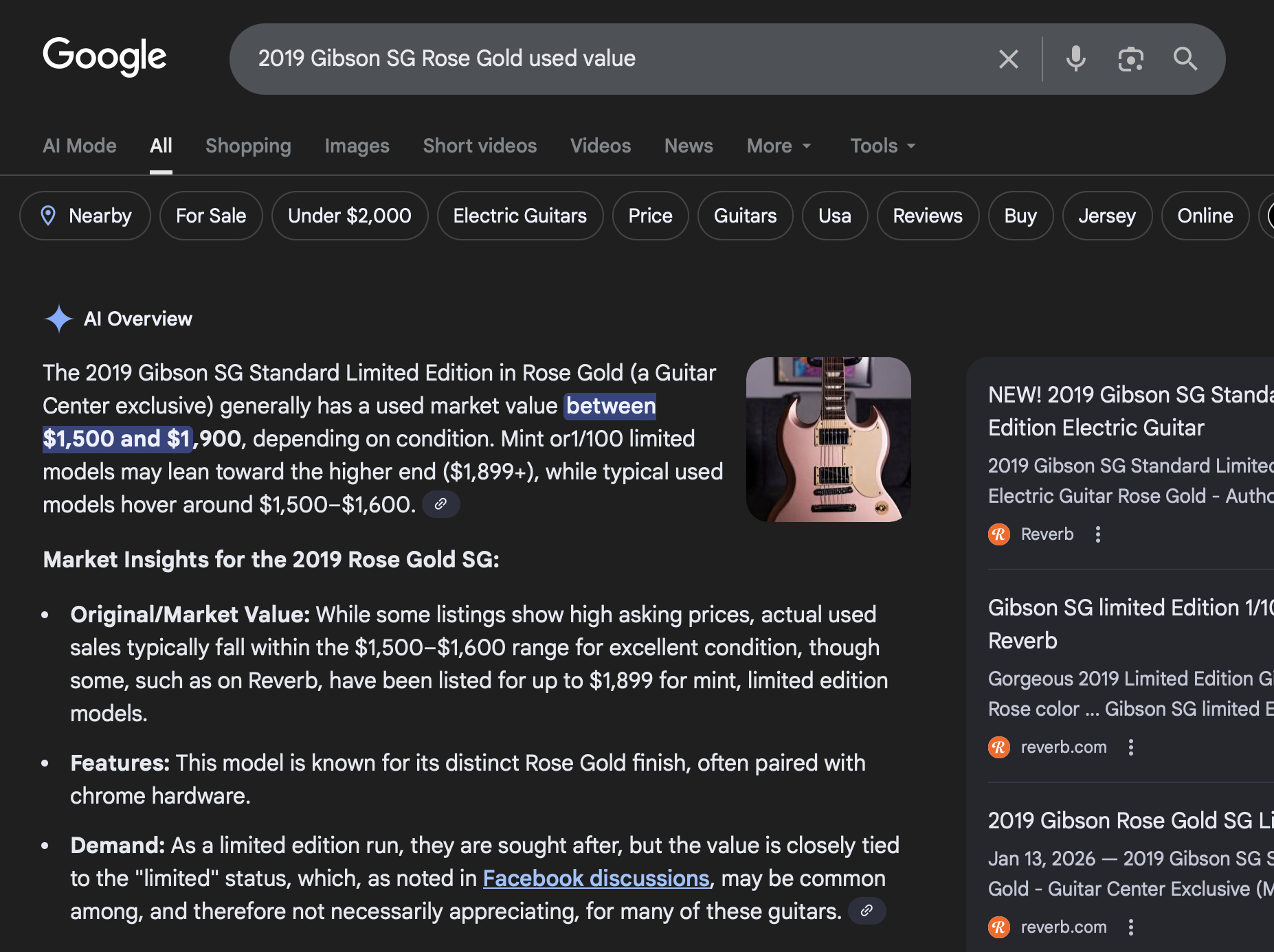
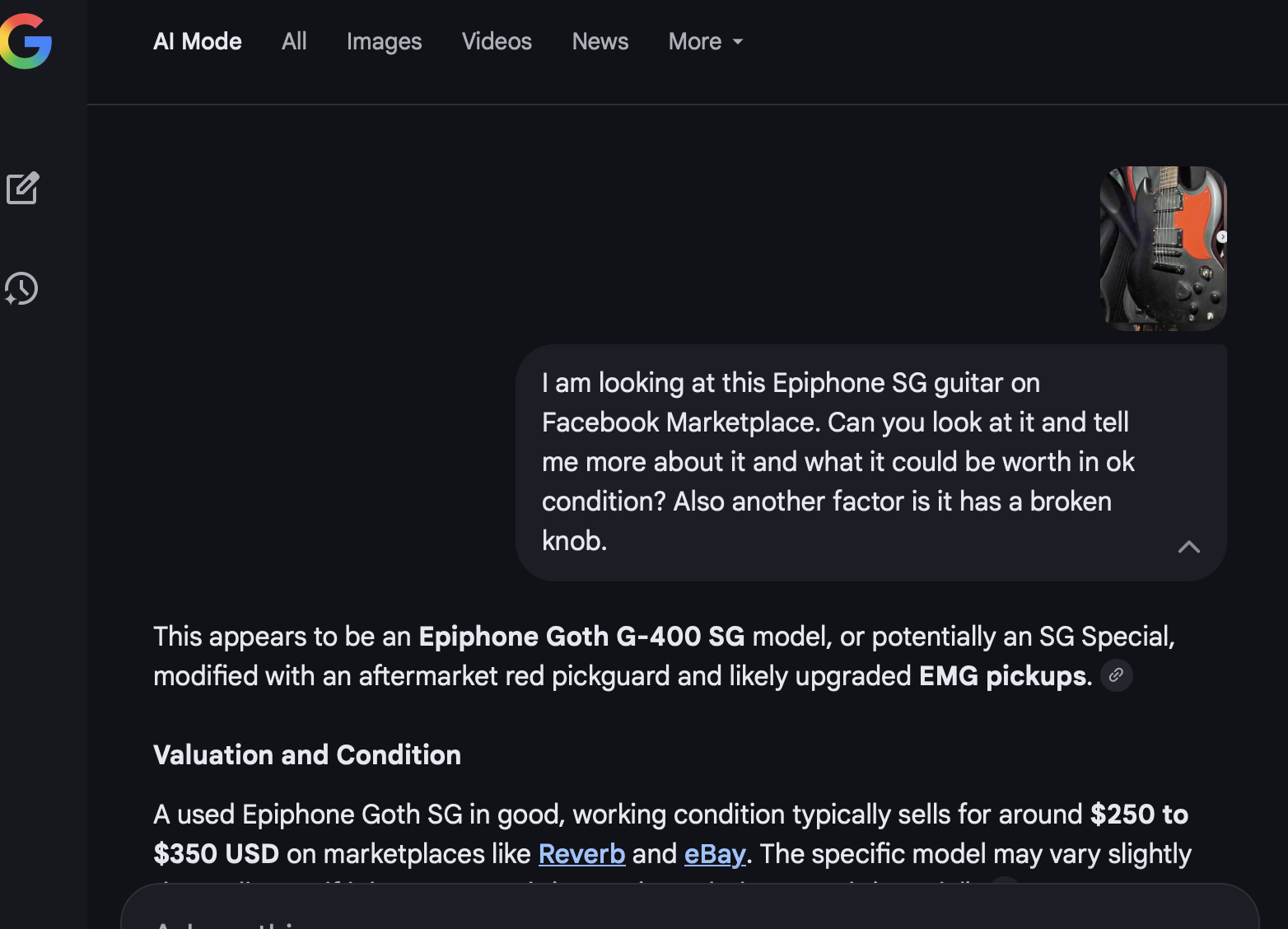
AI-assisted search can help verify model, finish, upgrades, and condition — especially when listings are vague.
Wrap-Up
Start with the brand and model along with the year & finish if you can get it. Evaluate condition, and use Google AI mode to compare real-world prices. If you’re unsure, ask questions, request more photos, and trust your process.